Guide
Thao Nguyen

TL;DR
Kimi K3 and GLM-5.3 are our top choices for agentic coding and reasoning.
GLM-5.3-Flash is the most notable open weight release of the summer: near-frontier coding at roughly one-sixteenth the cost, and it debuted anonymously as “Ox Alpha” before Z.ai revealed it.
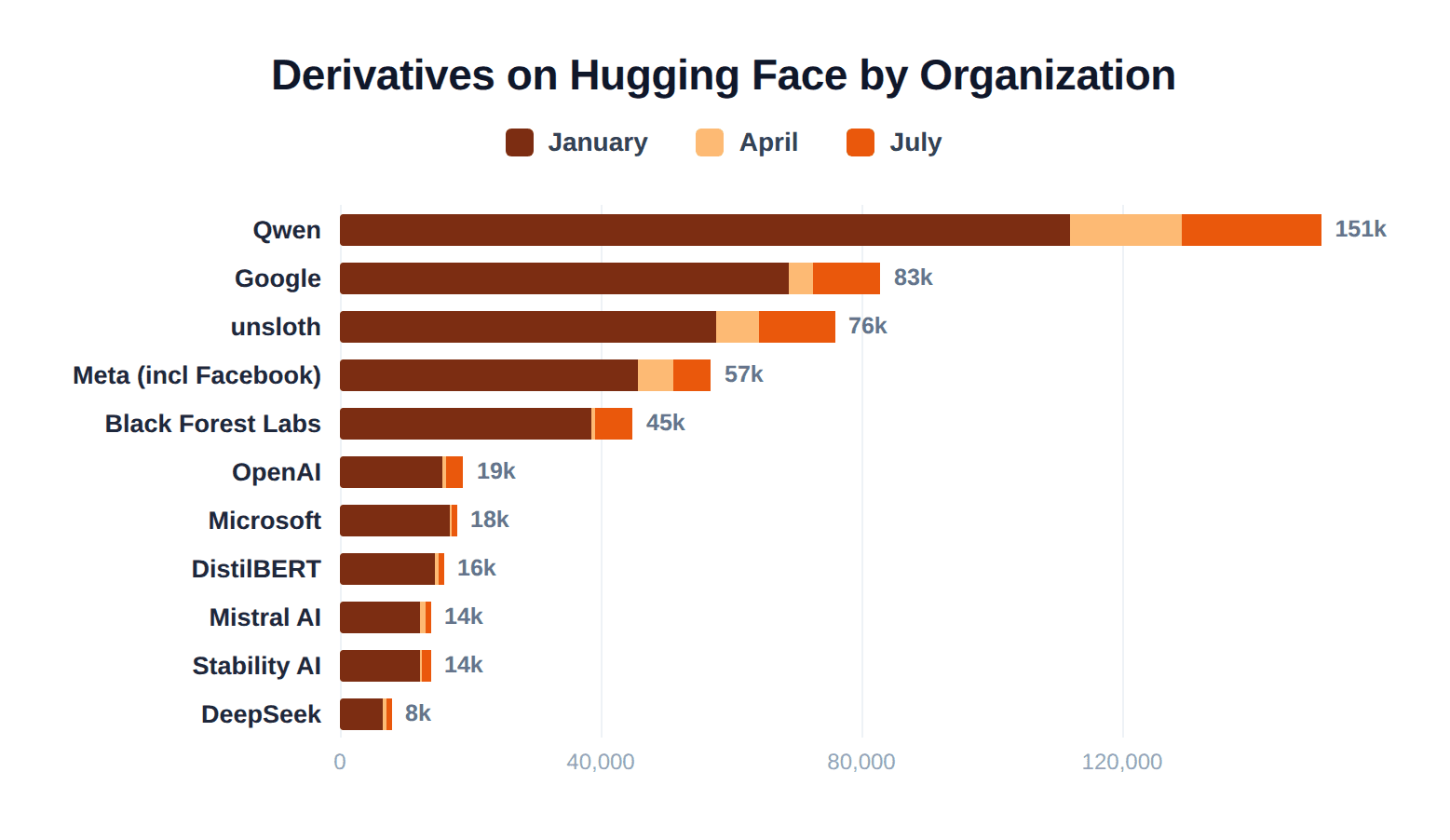
Qwen is the community’s base model: 151,448 derivative models on Hugging Face, 180 to 210 new derivatives a day, 39.6 million GGUF downloads a month.
This post is LLM-focused. We touch on open weight image generation briefly at the end. For deployment details and how to switch from proprietary models to open weights, see our developer’s guide to open weight models.
Model data as of September 1, 2026.
The List
1. Best for frontier-grade agentic coding and reasoning: Kimi K3 and GLM-5.3
These two are the strongest downloadable open weights this summer and neck and neck in different coding benchmarks:
Kimi K3 and GLM-5.3 tie on the Artificial Analysis Intelligence Index with a score of 60, just three points behind Claude Opus 5, and on DeepSWE where GLM-5.3 is the cheaper of the two to run at $3.99 per task against Kimi K3’s $4.65.
On GDPval-AA v2, GLM-5.3 pulls ahead (1758 to 1668), while Kimi K3 takes Terminal-Bench v2.1 (85.0 to 83.9). Kimi K3 also leads on scientific reasoning, scoring 93.5 on GPQA Diamond to GLM-5.3’s 91.7.
We can safely call it a tie between these two models.
Kimi K3 is the bigger model: 2.8T parameters with 104B active per token and 1M token context window, and text plus image input. It is also the most expensive open weight model in our assessment at $3.00/$15.00 per million tokens, and the slowest, generating around 38 tokens per second. The Kimi K3 License adds a separate commercial agreement once your annual revenue passes $20 million.
GLM-5.3 is smaller and cheaper: 753B parameters (40B active) and 1M token context, at $1.40/$4.40 per million tokens on Z.ai’s own API, with production-grade third-party hosts running it 20 to 30% below that. Z.ai also published the weights on Hugging Face, with the main restriction of the model’s license applying to companies that run Model-as-a-Service businesses above $10 billion in combined revenue over any trailing 12 months.
The practical call: reach for GLM-5.3 when cost matters, since it matches Kimi K3’s intelligence for less and self-hosts under near-MIT terms. Reach for Kimi K3 when you want its edge on scientific reasoning.

DeepSWE coding benchmark (September 2026)
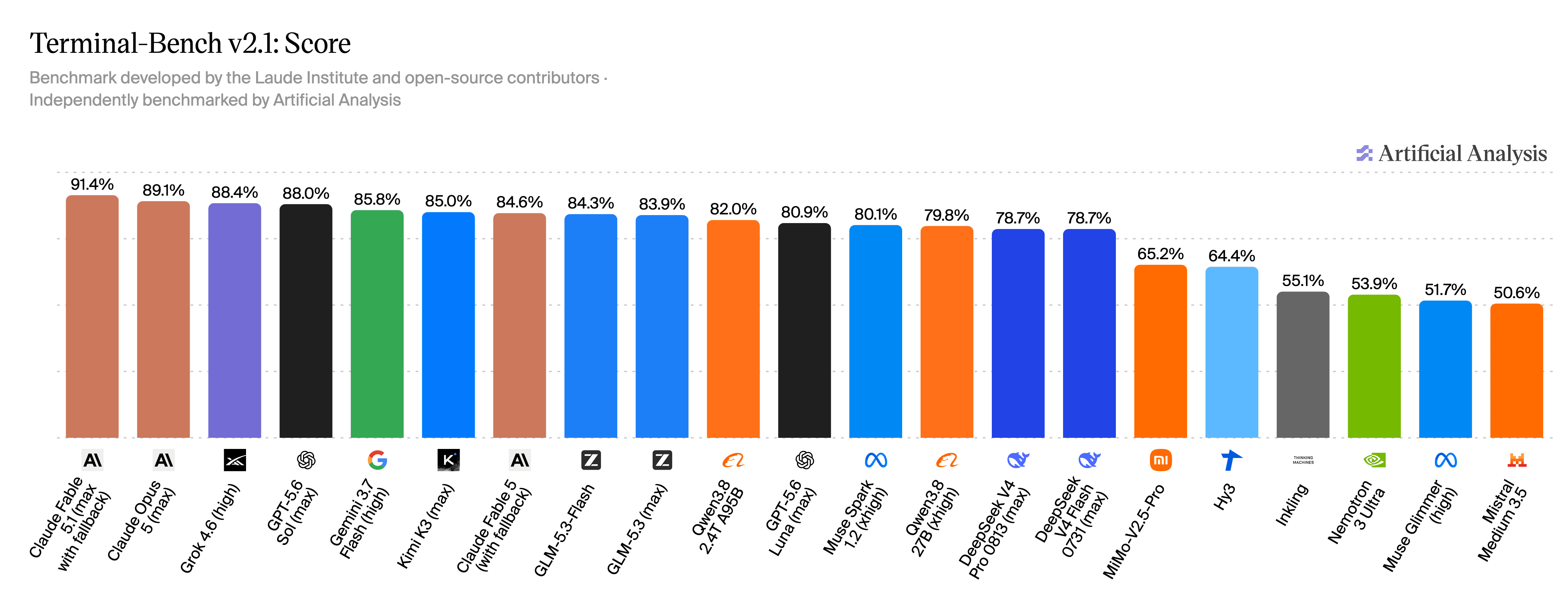
Terminal-Bench v2.1: Kimi K3 (85.0) edges GLM-5.3 (83.9), with GLM-5.3-Flash close behind at 84.3.

GDPval-AA v2: GLM-5.3 pulls ahead (1758 to 1668).
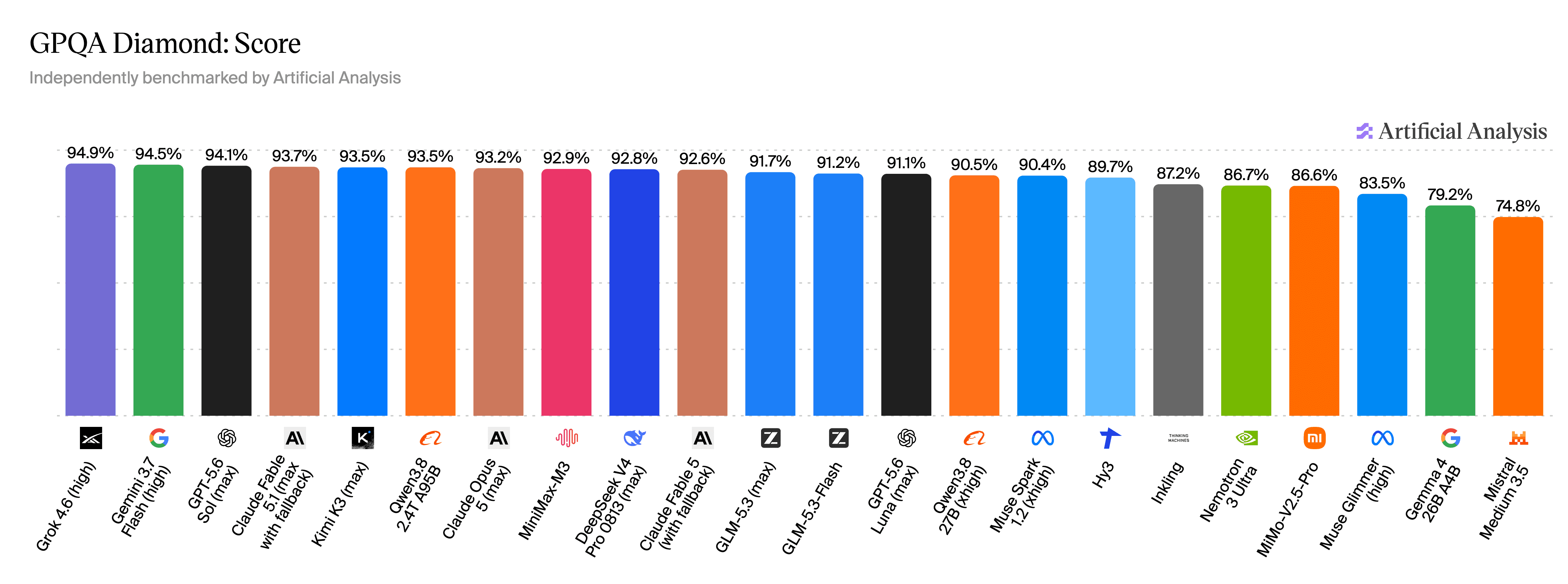
GPQA Diamond: Kimi K3 (93.5) leads GLM-5.3 (91.7) on scientific reasoning.
2. Best value, and the most notable model release of the summer: GLM-5.3-Flash
GLM-5.3-Flash (a 320B Mixture of Experts model with 18B active parameters) is one of the most notable model releases of summer 2026 and one we would point most teams to. On Artificial Analysis’s Intelligence Index, it falls in the most attractive quadrant and sits on the Pareto frontier. Landing between $0.09 and $0.24 per task depending on the benchmark, its cost profile is exceptional, and agentic coding ability stays close to full GLM-5.3. On DeepSWE it scores 63% against GLM-5.3’s 69%, a six-point gap for roughly one-sixteenth the cost. On Terminal-Bench v2.1, it actually edges its larger sibling, 84.3 to 83.9. For most coding and agent work, the Flash version is very powerful at a fraction of the price of other frontier models.
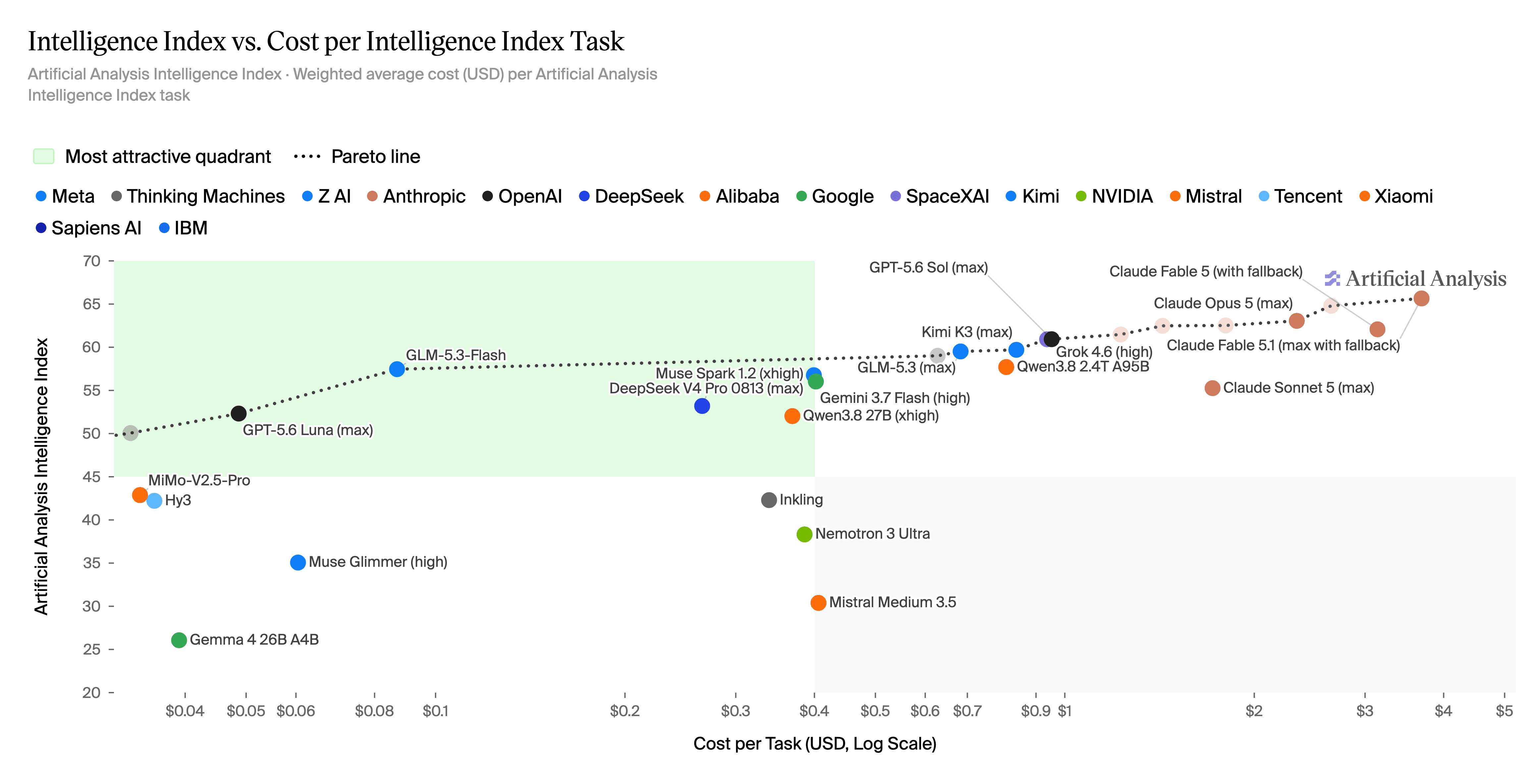
Artificial Analysis Intelligence Index vs. cost per task. Data as of September 1, 2026.
The model’s launch was also unconventional and created a lot of buzz. GLM-5.3-Flash first showed up anonymously as “Ox Alpha” on several inference platforms, and for a week developers traded theories about who built it, from Xiaomi to an American lab. It became OpenRouter’s biggest single-model launch, passing DeepSeek’s usage by 2x, before Z.ai revealed on August 26 that Ox Alpha was GLM-5.3-Flash and released the weights.
3. Best for fine-tuning and local deployment: Qwen3.8-27B

Qwen3.8-27B is a 27B parameter dense model from Alibaba (Apache 2.0 license). At its top reasoning-effort setting it scores 52 on the Artificial Analysis Intelligence Index, costs $0.50/$3.00 per million tokens, and runs on a single RTX 4090 at 4-bit (roughly 17 to 19 GB of VRAM).
What sets Qwen apart is adoption. Hugging Face’s State of Open Models report (August 2026) names it the community’s most popular base model, with ~151K derivatives on the Hub and 39.6 million GGUF downloads a month, more than five times that of Llama. You do give up some intelligence against the frontier, but still get a capable model that runs on a single consumer GPU, in a wide range of quantized builds, with no license friction on fine-tuning or shipping a derivative. That’s why more developers are building coding assistants, image generation pipelines, browser-use agents, and data-labeling systems on Qwen.

Inference and fine-tune open weight models
Inference and fine-tune language and decision models, all via one API.
Get started
Source: Hugging Face, “State of Open Models: Summer 2026,” huggingface.co
4. Best American open weight model: Inkling

Every model above this point comes from a Chinese lab: Moonshot, Z.ai, Alibaba, DeepSeek. For teams with strict procurement rules, data-governance requirements, or compliance policy that rule those out, Inkling is currently the strongest American open weight model.
Inkling is Thinking Machines Lab’s 975B parameter (41B active) Mixture of Experts model released under Apache 2.0. It has a 1M token context window and native text, image, and audio input. Inkling scores 42 on the Artificial Analysis Intelligence Index, the highest of any non-Chinese model with open weights, on the strength of results like 77.6 on SWE-bench Verified and 87.2 on GPQA Diamond. It is not the strongest model available today, trailing the frontier open weights by close to 20 index points, but what it offers is a permissive license and a customizable base from a US lab, which for some buyers is the whole point.
The runner-up is NVIDIA’s Nemotron 3 Ultra (550B parameters, 55B active and 1M token context window), a hybrid Mamba-Transformer design built for long-running agents, released under the permissive OpenMDW-1.1 license.
5. Best for edge and local multimodal: Gemma-4-26B-A4B
Gemma-4-26B-A4B is Google’s 25.2B parameter (3.8B active) MoE model with a 256K token context window, released under Apache 2.0. It costs $0.12/$0.37 per million tokens and takes text and image input, running on consumer hardware without giving up vision-language capability.
One admission: Gemma 4 shipped on April 2, so we are stretching the definition of summer to include it. We picked Gemma 4 because this is the model the category keeps coming back to. Gemma builds pull 20.8 million GGUF downloads a month, second only to Qwen.
For edge deployment, on-device inference, or any case where you need multimodal input without sending data to a cloud endpoint, Gemma-4 is the practical pick. If you need audio input as well, the smaller Gemma 4 E2B, E4B, and 12B variants add it, as the 26B-A4B is text and image only.
Honorable mention goes to Meta’s Muse Glimmer 30B, released August 10 under Apache 2.0, a true summer release and the stronger model on paper: it scores 83.5 on GPQA Diamond against Gemma-4-26B-A4B’s 79.2, and takes text and image input. The models needs 24 to 32 GB of VRAM, so if you have the headroom and want an always-on local agent model, Muse Glimmer is worth a look.
6. Best for Extraction and Guardrails: GLiNER2.5

Fastino Labs launched GLiNER2.5, the latest generation of the GLiNER family, on August 24. The model is available with three variants: 0.2B parameter (base), 0.3B parameter (multilingual), and 74M parameter (small), all released under Apache 2.0 license. It is an encoder model built for structured extraction and classification, and runs on CPU alone.
GLiNER2.5 replaces span enumeration with a new boundary-prediction architecture, unlocking unlimited span length, long-context extraction, joint entity-relation extraction, constrained classification, and span attributes.
The case for using an encoder here at all is straightforward: extraction and classification are not text generation problems, and using a billion parameter decoder model to solve them is slow, expensive, and impractical at production scale. GLiNER2.5 is roughly 1,000 times smaller than frontier models and handles zero-shot extraction and classification at a fraction of the cost.
What We’re Watching Next
The open weight space moves fast enough to make a post like this feel dated the week it ships. As summer closes, Tencent and Alibaba have already dropped their next flagships: Tencent’s Hy4 (a 770 billion parameter model, in preview) and Alibaba’s Qwen3.8-Max-0902, both open weight. Each landed in the top six of Arena’s Code Arena: WebDev leaderboard within days of release. The pace is dizzying, and genuinely exciting to watch.
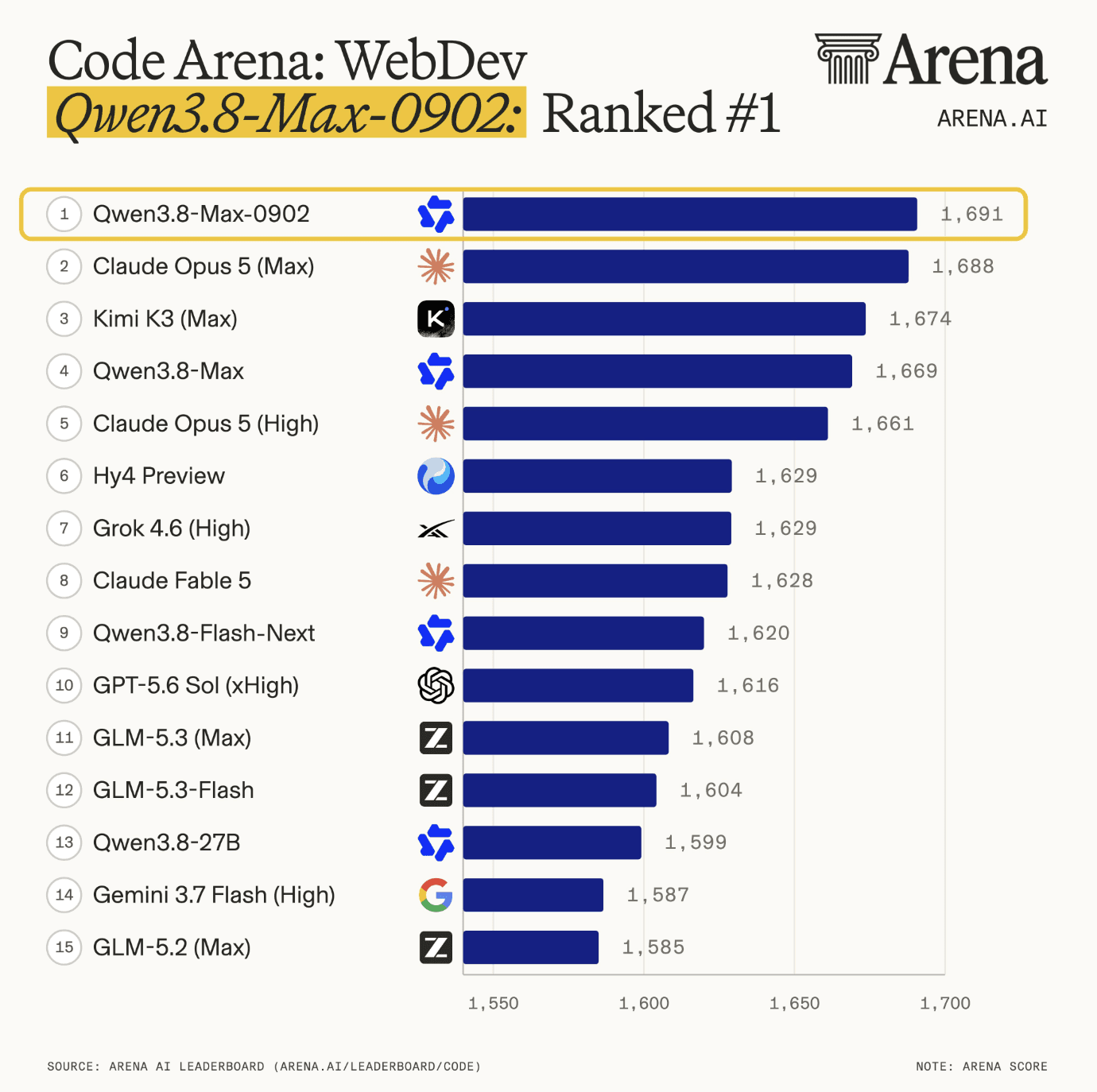
Code Arena: WebDev ranking as of September 1, 2026. Source: Arena.ai
Beyond Text: The Open Weight Multimodal Landscape
This post focuses on large language models but the open weight landscape extends beyond text into image, video, and multimodal generation, with a healthy and fast-moving ecosystem of its own. That deserves its own treatment, and we will give it one in a future post.
In the meantime, a few models that are on our radar in this category:
Image generation has a healthy open weight ecosystem. On the Design Arena leaderboard, which ranks models by head-to-head human preference votes, Ideogram 4.0 (9.3B parameters) currently leads the open weight field with Krea 2 Turbo (12B parameters) close behind. FLUX.2 [dev] (32B parameter model from Black Forest Labs) and Tongyi-MAI Z-Image (6B parameters), both models released earlier in the year, are still very popular.
Video generation is thinner, and most leading video models are still proprietary. The two open weight names to know are Wan 2.2 (Alibaba), an Apache 2.0 model known for fluid motion in fast, dynamic scenes, and LTX-2.5 (Lightricks), which generates synchronized audio and video with multi-shot continuity and runs on a single 32GB GPU at FP8.
Summary
A quick summary of the recommended models by use case:
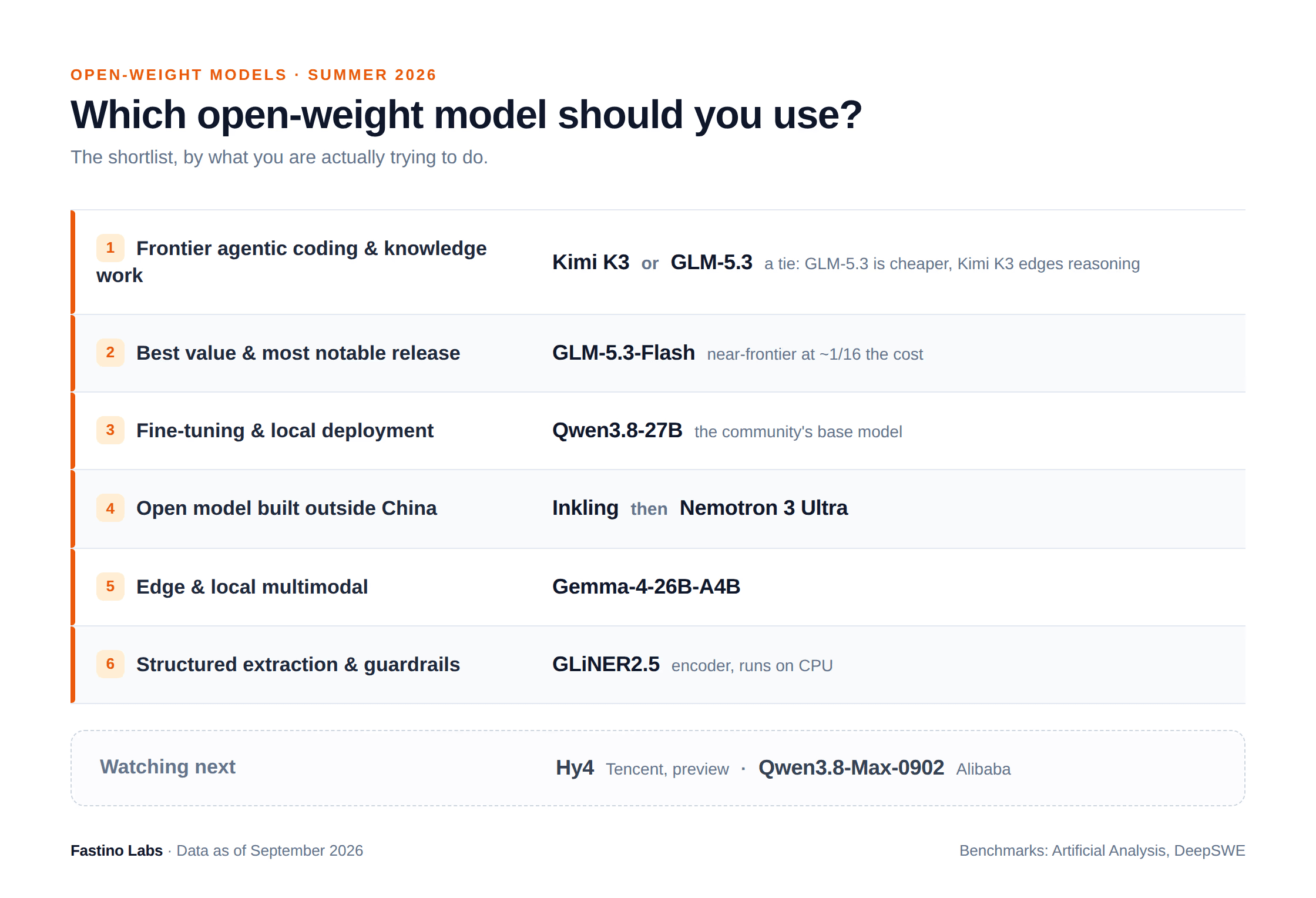
For deployment details and how to switch from a closed model API to open weights, see our developer’s guide to open weight models.
How We Evaluated
We benchmark using the Artificial Analysis Intelligence Index v4.1.1 (August 2026), which aggregates nine evaluations across reasoning, coding, agentic tool use, long context, and knowledge reliability. For coding specifically, we pull pass@1 and cost from DeepSWE (Datacurve), a contamination-free benchmark of 113 long-horizon engineering tasks across 91 repositories, run on the same mini-swe-agent harness for every model. We supplement with ecosystem data from Hugging Face’s State of Open Models: Summer 2026 report for adoption and fine-tuning signals.
